
Tile & Grout Project Calculator
Estimate the exact amount of tiles, grout, and thinset needed for your surface, alongside a complete projected budget.
Calculator Instructions
Determine exactly how many tile boxes, grout packages, and thinset bags you need for your floor or wall project based on accurate dimensional math.
- Select your installation surface location (floor or wall/backsplash) to set baseline parameters.
- Enter your surface length and width using whole inches and exact 1/16th fractions.
- Choose your tile material (ceramic/porcelain, stone, or glass) and input the tile length, width, and thickness in fractions.
- Input your specific tile box yield in square feet and the retail price per box.
- Enter your exact grout joint width in fractions and select the grout type (sanded, unsanded, or epoxy).
- Provide the grout package weight in standard decimals (e.g., 10 lbs or 25 lbs) and the price per unit, followed by the thinset bag weight and price.
- Set your material waste overage factor (typically 10% for straight layouts) and an unforeseen contingency buffer percentage.
- Select DIY or Professional installation, and input the contractor labor rate per square foot to calculate total project costs.
Understanding Your Results
- Net & Gross Surface Area: Converts your fractional linear dimensions into decimal square footage, calculating a base area and a gross area that includes your exact waste multiplier.
- Total Tiles & Boxes: Divides the gross area by the individual tile footprint (accounting for grout joint width) and compares it to box yield to determine exact retail boxes required, rounding up to whole units.
- Grout Requirement: Applies standard volumetric displacement formulas using tile thickness, width, and gap size combined with specific material density factors to output accurate grout weight and total retail packages.
- Thinset Mortar Needs: Dynamically calculates 50 lb bag requirements based on the appropriate trowel notch size dictated by your tile dimensions.
- Complete Budget Estimate: Multiplies rounded retail material quantities by your unit pricing, factors in professional labor costs by square foot, and adds your percentage-based contingency buffer for an accurate out-the-door price.
Securing exact material counts upfront prevents dye-lot mismatches from secondary orders and guarantees your budget aligns directly with real-world material yields.
Tools Needed
- Tape measure
- Notched trowel (sized to tile dimensions)
- Rubber grout float
- Tile cutter or wet saw
- Mixing drill with paddle attachment
- 5-gallon mixing buckets
- Grout sponge
- Chalk line or laser level
Materials Needed
- Ceramic, porcelain, natural stone, or glass tile (calculated by the box)
- Sanded, unsanded, or epoxy grout (packaged in lbs)
- Modified or unmodified thinset mortar (standard 50 lb bags)
- Tile spacers or leveling clip system
- Grout and tile sealer (if using natural stone)
Always check local building codes and HOA guidelines before starting.
How much grout do I need?
You calculate required grout by evaluating the volumetric displacement of the grout joints. This requires knowing your gross square footage, tile length, width, and thickness, plus the exact grout joint width. Specific density multipliers are then applied based on the grout type.
Run your exact tile dimensions through the calculator above to get precise pounds and retail bag counts.
Project Overview
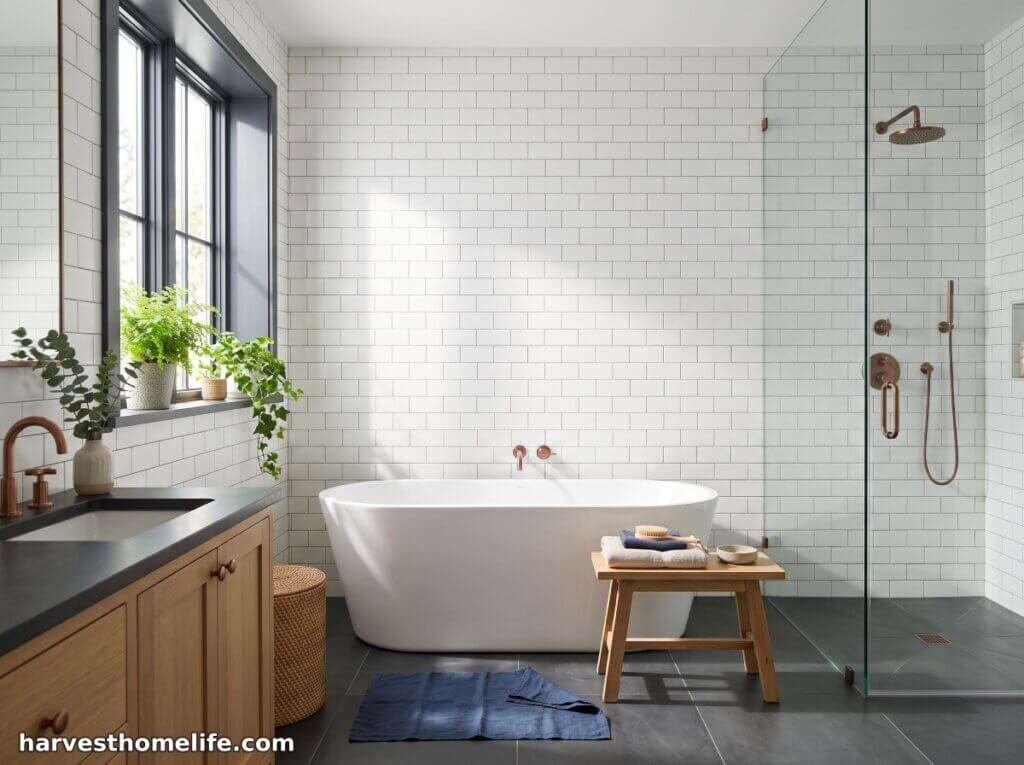
Planning a successful flooring or backsplash project requires more than a rough square footage guess; it demands a precise tile and grout calculator. Getting accurate material counts prevents mid-job trips to the hardware store and eliminates the risk of ordering tiles from different manufacturing dye lots, ensuring a consistent finish across the entire surface.
This tool functions as a complete tile square footage calculator and financial estimator, factoring in grout volume displacement, dynamic thinset trowel yields, and industry-standard waste factors. By combining exact physical material requirements with professional contractor labor rates, you generate a comprehensive estimate that protects your budget against unforeseen shortages.
Tile Installation & Estimation Guide
Understanding the raw math behind surface area calculations and material yield formulas guarantees your hardware store order matches your project scope perfectly.
How do I measure my surface area accurately for tile?
Precision begins with linear measurement. Pull your tape measure across the surface length and width, recording dimensions in whole inches and exact 1/16th fractions. Avoid rounding numbers heavily during this phase, as minor dimensional inaccuracies multiply across large floor plans, throwing off your total net square footage and base area logic.
How do tile size and grout gap affect material yields?
Grout volume displacement relies strictly on the physical footprint of the tile and the gaps between them. You must supply accurate linear fractions for the tile length, width, thickness, and grout joint width. A 1/8″ gap requires drastically less grout than a 1/4″ joint, and dense epoxy grout yields differently than traditional cementitious powder. Selecting the proper tile sub-type dictates both your grout density constants and cutting waste probabilities.
The Math Explained: Estimating Tile, Grout, and Thinset
Contractor-grade estimation goes beyond raw square footage. It accounts for retail packaging, dimensional joint spacing, and exact material coverage rates.
Tile Box Yield and Standard Waste Factors
Tiles are sold in full boxes, not partial square feet. The calculation divides your required gross area by the individual box yield and always rounds up to the next whole box. A standard 10% waste factor is added for straight-lay patterns to account for edge cuts, while diagonal layouts or complex mosaics typically demand a 15% waste margin.
Grout Density and Volumetric Formulas
Generic square footage multipliers cause material shortages. True grout calculation uses volumetric displacement: dividing the combined tile length and width by their product, then multiplying by the joint width, tile thickness, gross area, and a density factor. Cementitious grout uses a 1.38 density constant, while heavier epoxy relies on a 1.45 factor to accurately convert cubic volume into physical pounds.
Trowel Notch Sizes and Mortar Coverage
Thinset yields dictate how many 50 lb bags you must purchase. Coverage rates dynamically drop as tile sizes increase because larger formats require deeper trowel notches to prevent hollow spots.
| Tile Format Size | Trowel Notch Required | Estimated Yield (50 lb bag) |
|---|---|---|
| Small (< 8″ x 8″) | 1/4″ x 1/4″ | 85 sq. ft. |
| Medium (8″ x 8″ to 12″ x 12″) | 1/4″ x 3/8″ | 65 sq. ft. |
| Large Format (> 12″ x 12″ or Stone) | 1/2″ x 1/2″ | 45 sq. ft. |
Calculating Your Tile Installation Cost
Financial accuracy requires merging material quantities with execution strategy. The formula isolates the rounded retail units of tile boxes, grout bags, and thinset sacks, multiplying them by your local unit pricing. If hiring a professional tile setter, the total square footage is multiplied by their specific labor rate. Finally, an unforeseen contingency buffer (usually 10%) is applied against the base project subtotal to cover unexpected job-site conditions or structural prep work.
Frequently Asked Questions
Q. How to calculate square footage of tile needed?
A. Measure your surface length and width in inches. Convert both to decimal feet by dividing by 12, then multiply them together to get your net area. Multiply the net area by 1.10 for a standard 10% waste factor to determine your gross square footage requirement.
Q. How much thinset do I need?
A. Thinset coverage relies heavily on the trowel notch size dictated by your tile dimensions. A standard 50 lb bag yields approximately 85 sq. ft. with a 1/4″ x 1/4″ trowel for small tiles, but drops to 45 sq. ft. when using a 1/2″ x 1/2″ trowel for large format tile installations.
Q. How much does a professional tile setter charge for labor?
A. Professional contractor labor rates typically range from $5 to $15 per square foot. The final cost depends heavily on geographic market rates, the type of tile being installed, and layout complexity. Intricate mosaics or heavy natural stone generally push labor rates higher.
Planning your next project? Browse our master hub of Free DIY Home & Garden Calculators to get instant material lists, spacing math, and budget estimates.