Shelf Sag Calculator
Determine maximum shelf span, safe load capacity, and expected deflection based on material properties.
How to Use the Calculator
Calculate the exact expected deflection, maximum safe load capacity, or maximum safe span of a shelf based on its material properties, physical dimensions, and weight distribution.
- Select your Calculation Mode (Calculate Expected Sag, Calculate Max Load Capacity, or Calculate Max Shelf Span).
- Choose your Material Type (Red Oak / Hardwood, Plywood, Pine / Softwood, MDF, or Particle Board).
- Select your Load Distribution (Uniform for evenly spread weight, or Concentrated for center weight).
- Input the exact Shelf Span using inches and 16th-inch fractions (hidden in “Max Span” mode).
- Enter the Total Load in lbs (hidden in “Max Load” mode).
- Input your Shelf Depth (Front to Back) using inches and 16th-inch fractions.
- Input your Shelf Thickness using inches and 16th-inch fractions.
Understanding Your Results
- Performance Limit: Divides your total shelf span by 384 to establish the industry-standard threshold (the L/384 Rule) for maximum acceptable deflection before visual sag occurs.
- Status: Compares your expected sag to the acceptable limit. Outputs “Safe” if under the limit, “Noticeable Sag” if up to double the limit, and “Failure Risk” if over double.
- Expected Deflection (Sag): Factors your board’s stiffness (Moment of Inertia) against the material’s Modulus of Elasticity to output the exact fractional tape-measure flex.
- Maximum Safe Load: Reverses the L/384 rule to calculate exactly how many pounds the specific shelf can hold before bowing.
- Maximum Safe Span: Reverses the limit rule based on your weight input to dictate the exact fractional length your shelf can safely span.
You must adhere to the calculated limits or increase your material thickness to prevent permanent bowing and structural failure.
Tools Needed
- Tape measure (to verify exact span, depth, and thickness)
- Scale (to weigh intended heavy objects for load calculations)
Materials Needed
- Shelf material (3/4-inch plywood, MDF, pine, or hardwood boards)
- Heavy-duty metal shelf brackets
- Heavy-duty toggle bolts (for drywall installation without studs)
- 2-inch wood screws (for mounting brackets directly to wall studs)
- 3/4-inch wood screws (for securing shelves to the brackets)
Always check local building codes and HOA guidelines before starting.
How do you calculate how much weight a shelf can hold?
You calculate a shelf’s maximum capacity by determining the board’s stiffness (Moment of Inertia) and dividing it by the shelf span squared, adjusted for material strength and load distribution. Standard building practices dictate dividing the total span by 384 to find the maximum acceptable deflection.
Enter your exact shelf dimensions, material type, and intended load distribution into the tool above to generate your safe capacity limits.
Project Overview

Building shelves that bend under weight ruins the look of your room and creates structural hazards. Our shelf sag calculator provides the exact structural formulas needed to accurately determine maximum shelf span, load capacity, and expected deflection based on material type and thickness. Knowing exactly how wood fibers behave under stress allows you to design built-ins, bookcases, and storage racks that remain dead flat over time.
Different materials handle weight drastically differently. A standard pine board will bow long before a piece of red oak of the exact same size. Whether you need a dedicated plywood sag calculator for garage storage or you want to calculate shelf load capacity for a heavy kitchen pantry, you must factor in the material’s Modulus of Elasticity. This shelf span calculator strictly computes the board flex itself—it does not account for bracket spacing limits, cantilevered forces, or wall anchor pull-out strength.
Shelf Material Planning and Span Guide
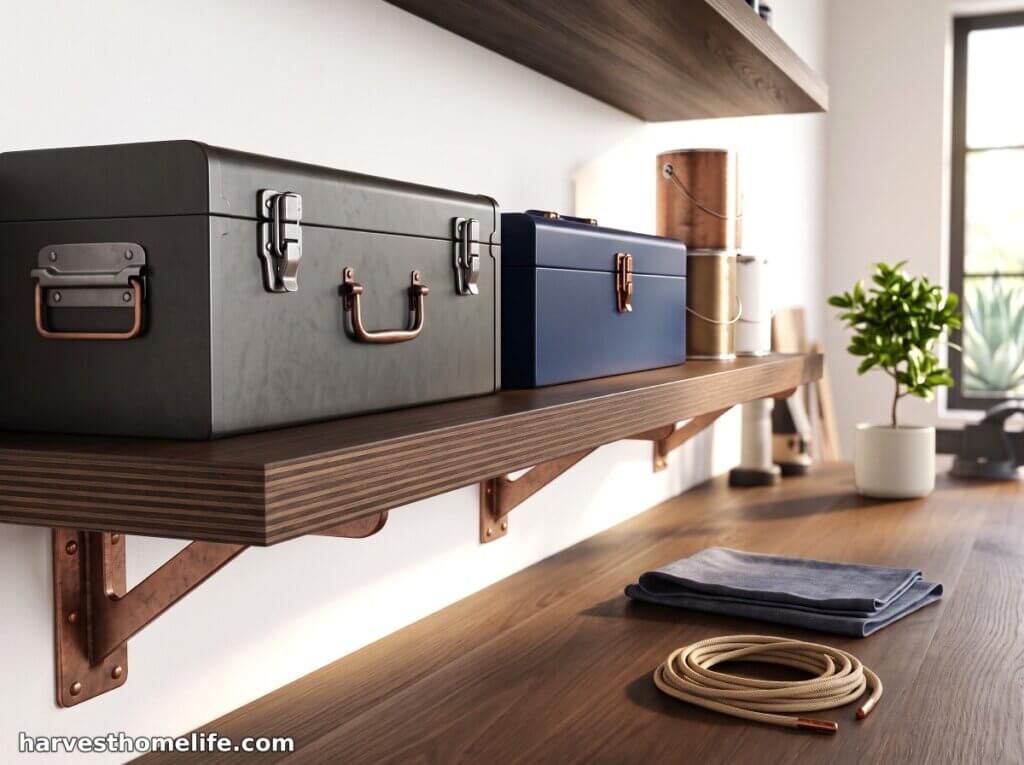
While the calculator above provides precise sag metrics for your specific layout, understanding the natural limitations of your chosen wood is just as important. Here is a quick reference guide to common material capacities.
Standard Maximum Spans for Common Materials
When building standard bookshelves or garage storage (assuming a typical load of 20 to 40 lbs per foot), you can safely use these maximum unsupported span lengths for 3/4-inch materials before noticeable sag occurs.
- MDF (Medium Density Fiberboard): 24 inches
- Solid Pine / Whitewood Board: 32 to 36 inches
- Standard Plywood (Fir/Pine): 36 to 48 inches
- Hardwood (Oak, Maple): 48 to 60 inches
How to Choose Between Plywood and MDF for Heavy Storage
For heavy storage, plywood is vastly superior to MDF. Plywood is constructed by gluing alternating layers of wood veneer, which creates a rigid, cross-grained structure that resists bending. MDF, on the other hand, is made of compressed sawdust and glue.
While it is incredibly smooth for painting, it lacks internal structural fibers and will permanently bow over time under sustained heavy weight. If you are building garage shelves or loading up heavy books, always opt for 3/4-inch plywood.
Frequently Asked Questions
Q. How much weight can plywood support?
A. The exact capacity depends entirely on the thickness and the span between supports. A piece of 3/4″ thick fir plywood spanning 32″ can typically hold around 50 lbs per linear foot without visible sag. Longer spans drastically reduce that capacity.
Q. How much weight can a floating shelf hold?
A. Floating shelf capacity is dictated by the mounting hardware and wall anchors, not just the board itself. While a hardwood board might technically support 200 lbs before sagging, standard floating brackets often max out around 40 lbs to 50 lbs before ripping out of the wall.
Q. How much weight can a shelf hold in drywall?
A. Drywall holds very little weight on its own. Standard plastic anchors might support 10 lbs to 15 lbs each, while heavy-duty toggle bolts can handle 50 lbs. Always secure shelf brackets directly into wall studs to maximize the true load capacity of your shelf material.
Planning your next project? Browse our master hub of Free DIY Home & Garden Calculators to get instant material lists, spacing math, and budget estimates.