
Retaining Wall Block Calculator
Plan your project with precision. Calculate exact material takeoffs (blocks, gravel, drainage) and estimate total project costs in one place.
How to Use the Calculator
Calculate the exact retail quantities and localized project costs required to build a structurally sound retaining wall.
- Measure your Total Wall Length and Total Wall Height (including the buried base course) down to the exact 1/16 of an inch.
- Enter the Length and Height of your Main Wall Block, along with the Capstone Length in exact tape measure fractions.
- Input your localized material costs in strict decimals for main blocks, capstones, base/drainage gravel (per cubic yard), 4-inch drainage pipe sticks (per 10-foot length), masonry adhesive tubes, and geotextile filter fabric rolls.
- Enter the total square foot yield of your filter fabric roll.
- Provide your professional hardscaping contractor labor installation rate per square face foot, or leave at zero for DIY.
- Set an unforeseen contingency buffer percentage to account for site-specific budget overruns.
Understanding Your Results
- Total Main Blocks & Capstones: Outputs the exact retail count needed, factoring the physical rows, subtracting the capstone row, and adding a standard 10% waste factor for cuts and breakages.
- Base & Backfill Gravel: Calculates the cubic yards needed for a standard 6-inch deep by 24-inch wide base trench plus a 12-inch wide drainage backfill directly behind the blocks, rounded up to the nearest 0.25 cubic yards.
- Drainage Pipe & Fabric: Determines the number of 10-foot 4-inch drain pipe sticks and geotextile filter fabric rolls required, accounting for the back of the wall, a 1 1/2 foot top overhang, and overlap waste.
- Masonry Adhesive: Estimates the required exterior-grade polyurethane tubes based on a standard 15 linear foot yield per tube to secure the capstone row.
- Project Cost Subtotals: Multiplies your retail-rounded material quantities by your localized costs, calculates the professional labor subtotal based on total square face footage, and adds the contingency buffer for an exact final budget estimate.
Stop guessing on your hardscaping material runs. This structural takeoff tool provides exact, retail-ready quantities you can buy directly from the supply yard.
Tools Needed
- Tape measure
- Torpedo level
- Dead blow hammer
- Hand tamper or plate compactor
- Shovel and wheelbarrow
- Caulking gun
Materials Needed
- Concrete retaining wall blocks (main body)
- Solid concrete capstones
- 3/4-inch crushed angular gravel (for base and backfill)
- 4-inch perforated corrugated drainage pipe (10-foot sticks)
- Heavy-duty non-woven geotextile filter fabric
- Exterior-grade polyurethane masonry adhesive (e.g., PL Premium)
Always check local building codes and HOA guidelines before starting.
How many blocks do I need for a retaining wall?
To determine how many retaining wall blocks do i need, divide your total wall length by the block length to find the blocks per row. Divide the wall height by the block height to find total rows. Multiply these values, subtract the capstone row, and add 10% for waste.
Plug your exact wall dimensions into our calculator above to get an instant, retail-ready material takeoff.
Project Overview
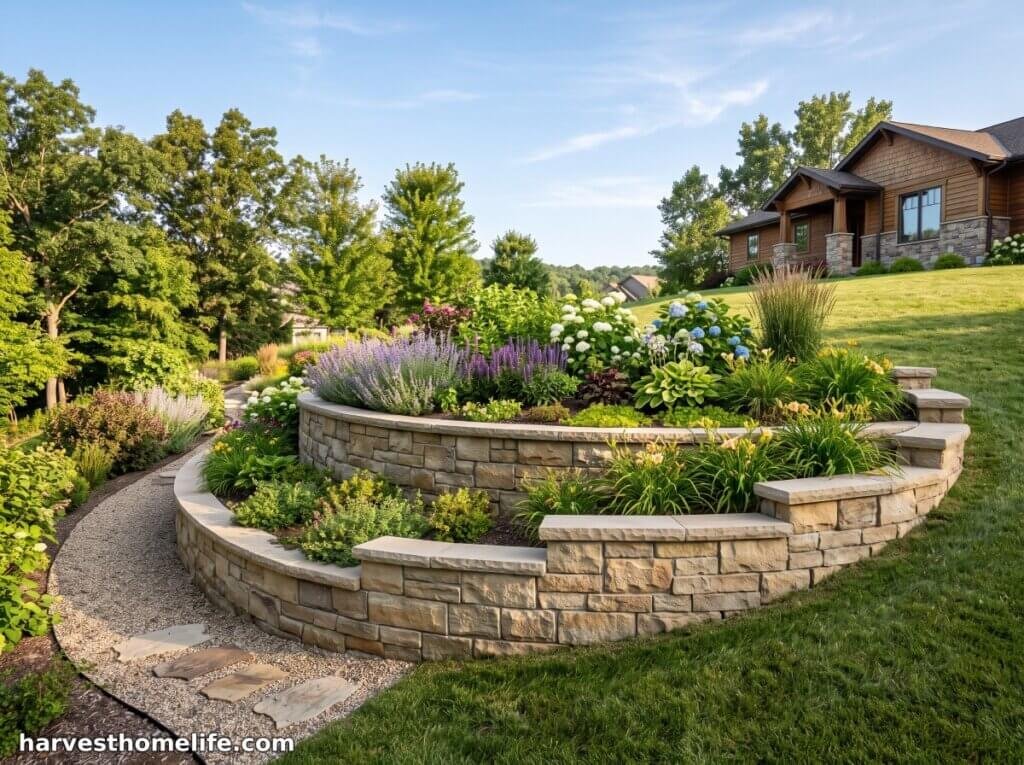
Planning a hardscaping project requires more than simply dividing your wall face area by the square footage of a single block. Our retaining wall block calculator serves as a complete structural takeoff estimator, ensuring you never fall short on the hidden materials required to build a wall that actually lasts.
A structurally sound build requires a proper leveling trench, perforated drainage lines, and a heavy gravel backfill void to prevent hydrostatic pressure from blowing out the face.
Whether you are comparing DIY material costs or verifying a professional quote, this retaining wall cost estimator translates standard tape measure fractions directly into real-world retail units.
We automatically add a standard 10% hardscaping waste factor, convert cubic feet of base material into 0.25 cubic yards of gravel, and break down your accessory needs like masonry adhesive and filter fabric rolls so you can head straight to the supply yard with exact numbers.
Material Takeoff & Structural Math Breakdown
Understanding the engineering formulas behind the calculator prevents material shortages and ensures structural stability.
How do you measure a retaining wall for blocks?
To properly measure your wall, always input your physical dimensions using exact tape measure fractions. The tool converts all inch-based measurements down to 1/16 of an inch into decimal feet for background volume and area calculations. Remember that your Total Wall Height must include the base course, which is typically buried below grade for structural anchoring.
How do you estimate retaining wall material costs locally?
Supply yard prices fluctuate, so checking local rates is key. Enter your localized costs in decimals for each component. The calculator multiplies all retail-rounded quantities by their respective user-input costs, adds the professional labor subtotal (Wall Face Sq Ft × Labor Rate), and applies the user-defined Contingency percentage to the combined subtotal to prevent budget overruns.
How are retaining wall drainage materials calculated and why are they required?
We do not rely on generic area division. This tool mimics a contractor’s real-world structural takeoff to determine exactly what you need at the supply yard.
| Component | Takeoff Calculation Logic |
|---|---|
| Main Wall Blocks | (Total Rows – 1 Capstone Row) × Blocks per Row + 10% Standard Hardscaping Waste. |
| Drainage Gravel (CY) | Calculates a 6-inch deep × 24-inch wide base trench + 12-inch wide backfill void, converted to Cubic Yards and rounded up to the nearest 0.25 CY. |
| Drainage Pipe | Calculated at 1 linear foot (LF) per LF of wall, divided into 10-foot sticks. |
| Filter Fabric | Covers the back of the wall plus a 1 1/2 foot top overhang, adds 10% overlap waste, divided by your specific roll yield. |
Generic calculators that only account for block face area ignore the materials that prevent structural failure. Hydrostatic pressure from trapped water is the primary cause of retaining wall blowouts.
The 4-inch perforated pipe and heavy gravel backfill void evacuate this water, while the non-woven geotextile fabric prevents surrounding soil from clogging the gravel. Finally, masonry adhesive is required to lock the top row of capstones in place against foot traffic and weather.
Frequently Asked Questions
Q. How much does a retaining wall cost?
A. The cost of a retaining wall depends heavily on your material choices and site accessibility. Using a retaining wall cost calculator helps narrow this down, but a standard concrete block wall typically costs between $25.00 and $50.00 per square face foot when factoring in blocks, gravel, drainage, and professional labor.
Q. How do you build a retaining wall?
A. Building a structurally sound retaining wall involves five core steps: 1) Excavating a 24-inch wide trench. 2) Laying and compacting a 6-inch deep angular gravel base. 3) Setting the first course of blocks perfectly level below grade. 4) Installing perforated drainage pipe and geotextile filter fabric behind the wall. 5) Stacking the remaining blocks while simultaneously backfilling with 12 inches of drainage gravel behind each course.
Q. How much does a professional hardscaping contractor charge for retaining wall installation?
A. Professional labor rates typically range from $40.00 to $80.00 per square face foot. Contractors adjust this rate based on site accessibility, soil conditions, required heavy equipment access, and the complexity of cuts required for corners and curves.
Planning your next project? Browse our master hub of Free DIY Home & Garden Calculators to get instant material lists, spacing math, and budget estimates.