Wood Fence Material Calculator
Calculate the exact lumber sizes, posts, rails, fasteners, and concrete bags required to build your wood fence.
How to Use the Advanced Fence Material Estimator
Calculate exact lumber, fastener, and concrete yields for your fencing project based on total linear footage and physical board dimensions.
- Enter your Total Fence Length in feet, inches, and fractions down to 1/16″.
- Input the Fence/Picket Height and Total Post Length (including hole depth) in feet and inches.
- Set your Post Spacing On-Center in feet, inches, and fractions.
- Provide the Actual Picket Width and Gap Space in inches and fractions. Enter a negative fraction for overlapping board-on-board designs.
- Specify any Extra Posts for Gates/Ends, Horizontal Rails per Section, and Fasteners per Picket.
- Enter your Concrete Bags per Post (e.g., 1.5 or 2) and your Material Waste Factor percentage.
Understanding Your Results
- Total Posts: Calculates fence sections based on length divided by on-center spacing, rounds up, adds one base post plus your extra gate/end posts, and labels the count with the required physical post length.
- Total Rails: Multiplies the total sections by your selected rails per section, outputting the exact count of 2x4s needed to frame the structure.
- Total Pickets: Divides total fence length by the effective picket width (actual width plus gap), seamlessly applying negative gaps for overlapping board styles. Outputs count with specific height labels.
- Fasteners: Computes the total hardware by multiplying pickets by fasteners per picket, plus 4 structural fasteners per rail-to-post connection.
- Concrete Bags: Multiplies the final calculated post count by your specified bags per post.
- Waste Application: Applies your designated waste percentage buffer to the base posts, rails, and pickets, rounding up to the nearest whole unit.
Taking the time to dial in precise fractional spacing guarantees an accurate physical shopping list, eliminating mid-project trips to the lumber yard.
Tools Needed
- Post hole digger or gas-powered earth auger
- 100-foot reel tape measure
- 4-foot standard level and a magnetic post level
- Circular saw or 10-inch miter saw
- String line and wooden stakes
- Cordless impact driver or pneumatic framing nailer
- Wheelbarrow and flat shovel for mixing concrete
Materials Needed
- 4×4 pressure-treated pine or rough-sawn cedar posts
- 2x4x8 pressure-treated framing lumber for horizontal rails
- 1×6 cedar or treated pine fence pickets (actual width 5 1/2″)
- 50 lb bags of fast-setting concrete mix
- 1 5/8″ exterior-grade wood screws or galvanized ring-shank nails (for pickets)
- 3″ exterior-grade wood screws (for securing rails to posts)
Always check local building codes and HOA guidelines before starting.
How many fence pickets do I need?
Divide your total fence length by the width of a single picket plus the gap between them. For a 100-foot fence using 5 1/2-inch wide pickets with no gap, you need approximately 219 pickets before applying a waste factor.
Plug your exact linear footage into our fence lumber calculator below to get your final, waste-adjusted board counts instantly.
Project Overview
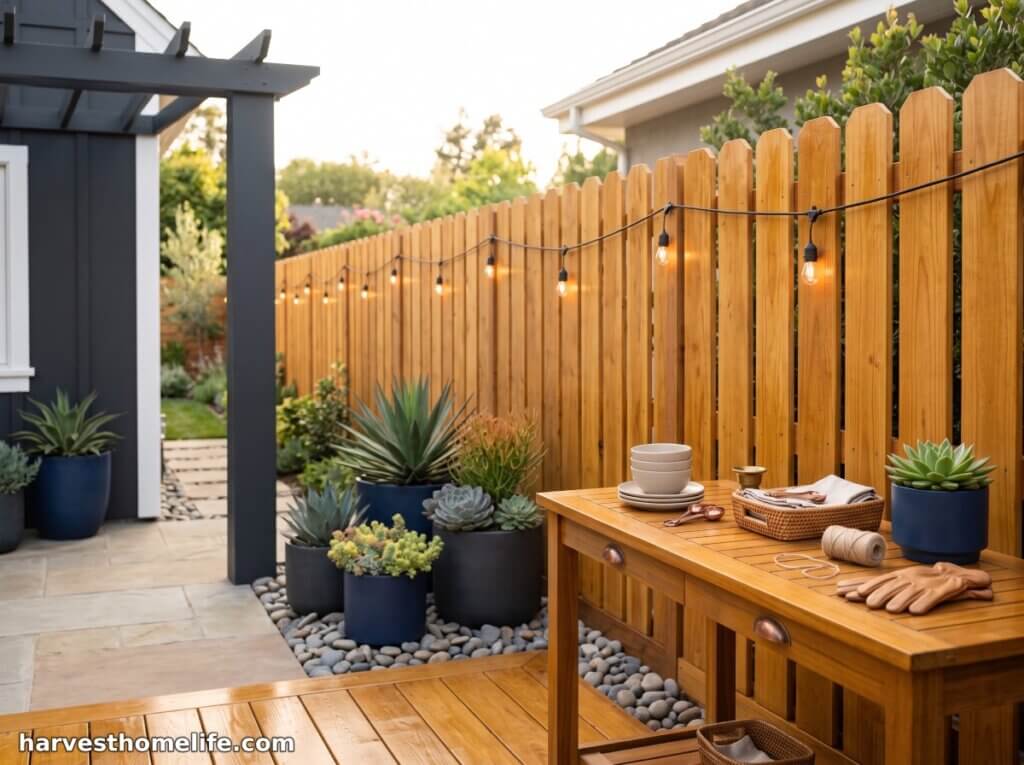
Building a straight, structurally sound barrier requires more than just digging holes. Utilizing a highly accurate wood fence material calculator ensures you purchase the exact count of posts, rails, pickets, and concrete required to finish the job without excessive leftovers. Every cut and overlap alters the math, making fractional measurement precision necessary for a clean build.
Whether you are plotting a standard side-by-side design or running a specialized board on board fence calculator for overlapping pickets, knowing your exact material needs prevents costly supply errors. This tool processes your post spacing, exact picket widths, and desired gaps into a highly dependable hardware store shopping list, streamlining the purchasing phase of your project.
Fence Planning & Material Guide
Proper material selection and spacing math dictate the structural integrity and visual appeal of your finished fence line.
How does wind load affect standard fence post spacing?
Spacing fence posts exactly 8 feet on-center is the industry standard for typical residential yards, but high-wind areas demand closer spans. Dropping post spans to 6 feet increases overall wall rigidity and prevents the horizontal 2×4 rails from sagging or snapping under heavy wind loads.
How do you calculate gaps for a board-on-board privacy fence?
Never use nominal lumber dimensions for your layout math. A standard 1×6 picket has an actual physical width of 5 1/2″. While a side-by-side layout relies on zero gap spacing to create a solid visual wall, a board-on-board design uses overlapping pickets to block sightlines as wood naturally shrinks. To calculate the required lumber for overlapping boards, you must input a negative gap (like -1″) into the calculator.
How much concrete and waste should be factored into the build?
Concrete requirements scale aggressively with post hole depth and diameter. Most U.S. building codes require sinking posts below the local frost line. Expect to pour 1.5 to 2 standard 50 lb bags of fast-setting concrete per 8-inch diameter post hole. Always apply a 5% to 10% material waste factor to account for warped boards, split ends, and bad cuts. For hardware, plan for 4 heavy-duty fasteners per rail-to-post connection and 2 to 3 smaller fasteners per horizontal rail intersection on each individual picket.
Frequently Asked Questions
Q. How many bags of concrete per fence post?
A. A standard 4×4 fence post set in an 8-inch diameter hole dug below the frost line typically requires 1.5 to 2 standard 50lb bags of fast-setting concrete.
Q. How many pickets per 8 foot section?
A. For a standard 8-foot section using actual 5 1/2-inch wide pickets (nominally 1×6) placed side-by-side for a privacy fence, you will need 18 pickets per section.
Q. How does a professional fencing contractor bid a wood fence job?
A. Contractors bid by calculating exact linear footage to determine raw material costs (posts, rails, pickets, concrete, and fasteners) including a 5-10% waste buffer, and then adding specialized labor rates based on terrain difficulty and soil digging conditions.
Planning your next project? Browse our master hub of Free DIY Home & Garden Calculators to get instant material lists, spacing math, and budget estimates.