Plywood Cut List Calculator
Optimize how project pieces fit onto 4×8 plywood sheets, calculate board yield, and minimize wood waste with a generated 2D visual layout.
How to Use the Calculator
This tool calculates the optimal 2D bin-packing layout for rectangular project parts onto standard or custom plywood sheets, minimizing waste and visualizing exactly where to make your cuts.
- Select your Plywood Sheet Width and Length using the fractional tape measure dropdowns (down to 1/16″).
- Choose your Saw Blade Kerf Width (None, 1/16″, 1/8″, or 1/4″) to account for material lost to sawdust.
- Toggle the Global Sheet Grain Direction to force the algorithm to prevent cross-grain mismatches on finished pieces.
- Enter the Part Width, Part Length, and Quantity for your required pieces, selecting whether to match the grain for each specific part.
- Input the Price per Plywood Sheet, the Professional Carpenter Labor Rate per sheet cut, and set an Unforeseen Contingency Buffer percentage to cover accidental miscuts.
Understanding Your Results
- Total Sheets of Plywood Required: The exact physical count of sheets needed to finish the build.
- Total Usable Board Yield (%): The percentage of the wood that becomes usable project parts.
- Total Wood Waste & Kerf Dust (%): The percentage of the sheet lost to offcuts and the saw blade path.
- Interactive 2D Visual Cutting Diagram: A mapped scale blueprint showing the layout, cut sequence, and kerf gaps for every sheet using edge-to-edge straight cuts.
- Base Subtotal: Combined cost of raw material and labor rates.
- Contingency Buffer Amount: The cash set aside to account for ruined sheets due to blowout or hidden voids in the core.
- Exact Total Project Cost: The final out-of-pocket expense to break down all sheet goods.
The 2D guillotine bin-packing algorithm automatically accounts for blade thickness during the packing process by subtracting the kerf from the remaining free space after every cut.
Materials Needed
- 4’x8′ Sheets of 3/4″ Birch Plywood
- 4’x8′ Sheets of 1/4″ MDF (for drawer bottoms or back panels)
- Wood Glue (16 fl oz bottle)
- 1 1/4″ Pocket Hole Screws
- 3/4″ Iron-on Wood Veneer Edge Banding
Tools Needed
- Track Saw with a 48-Tooth Blade (or Table Saw)
- 25-Foot Tape Measure
- 7″ Speed Square
- Pocket Hole Jig
Always check local building codes and HOA guidelines before starting.
How many sheets of plywood do I need?
To determine exactly how many sheets of plywood you need, you cannot simply divide the total square footage. You must map the exact dimensions of your project parts onto the physical sheet using a 2D bin-packing layout that accounts for blade kerf and grain direction after every cut.
For a precise layout that accounts for grain direction, input your exact cut list into the calculator above to generate a scaled shop blueprint.
Project Overview
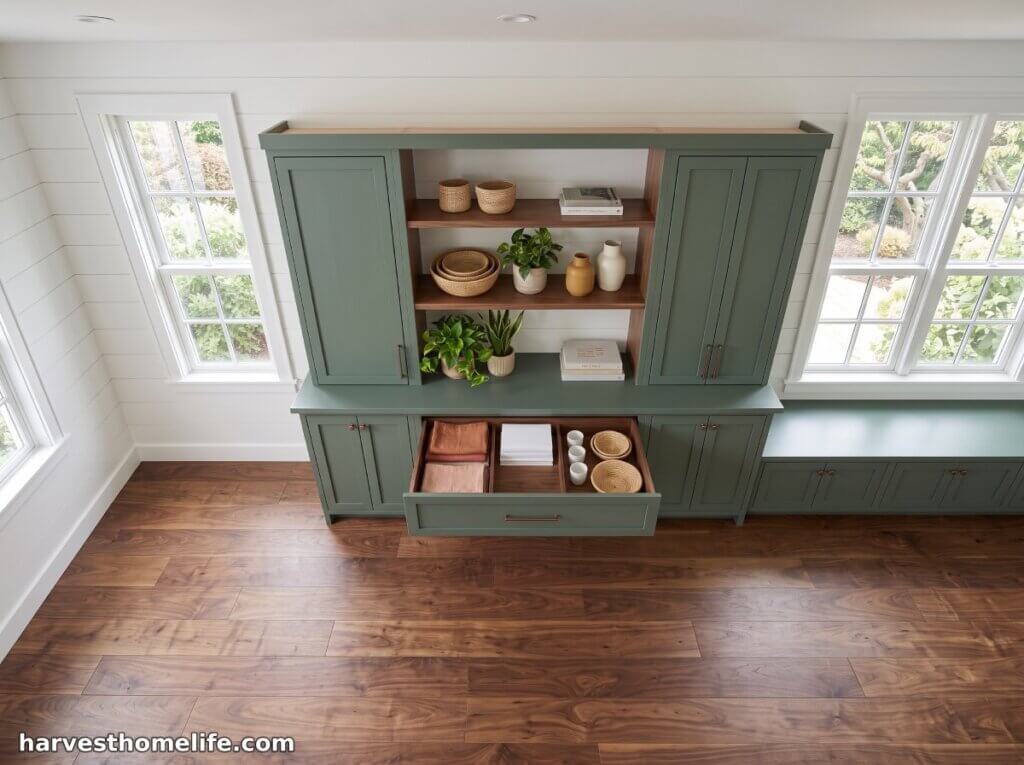
Breaking down sheet goods by hand without a clear map leads to expensive offcut waste and ruined panels. A dedicated plywood cut list calculator removes the guesswork by automating the 2D bin-packing process for all your rectangular project pieces. Instead of manual fractional math, the algorithm packs your layout to keep edge-to-edge straight cuts clean and physically possible with standard track saws.
Building a kitchen island or garage storage racks requires tight material optimization to keep costs low. By mapping your plywood calculator layout digitally before firing up the saw, you lock the wood grain direction for cabinet fronts and ensure the blade kerf doesn’t secretly eat 1/8″ out of your final measurements. The result is maximum board yield and zero surprise trips to the lumber yard.
Woodworking Material & Optimization Guide
Understanding the specific mechanics behind yield optimization and blade sizing guarantees clean cuts, accurate material estimates, and professional cabinet finishes.
Understanding Board Yield and Minimizing Wood Waste
Yield determines how much of your expensive sheet ends up in the final build versus the scrap bin. The math relies on dividing the total area of all project parts by the total area of the required plywood sheets. A high yield percentage means you maximized the surface area. Using a dedicated plywood yield calculator handles this geometry instantly, sorting parts by largest surface area first to pack the 4’x8′ bounding box perfectly.
Why Blade Kerf Thickness Matters for Sheet Goods
Every cut turns a fraction of the wood into sawdust. An effective part width equals the physical part width plus the saw blade kerf width. Ignoring this gap guarantees the final part on your sheet will be physically too short. Match your input to the physical blade on your saw.
| Blade Type | Standard Kerf Width | Best Use Case |
|---|---|---|
| Thin Kerf Circular Saw | 1/16″ to 3/32″ | Battery-powered track saws (less resistance) |
| Full Kerf Table Saw | 1/8″ | Standard cabinet saws (prevents blade deflection) |
| Dado Stack | 1/4″ to 13/16″ | Cutting grooves for drawer bottoms and cabinet backs |
Calculating Project Cost, Labor, and Contingency
Budgeting involves more than just the price tag at the hardware store. The financial formula multiplies the total sheets required by the material price and adds the total sheets required multiplied by the professional carpenter labor rate. Always factor in a standard 10.00% contingency buffer. This financial padding accounts for ruined sheets caused by edge blowout, bad measuring, or hidden voids inside the plywood core.
Setting Your Plywood Dimensions and Saw Blade Kerf
Use the fractional tape measure fields to dial in sheet sizing down to 1/16″ to reflect real-world material (like 48 1/2″ sanded pine panels). Select your specific blade thickness to ensure the algorithm adjusts the remaining free space after every single pass of the saw.
Entering Your Parts and Locking Wood Grain Direction
Input the exact width and length for every drawer face, shelf, and carcass wall. If you are building stained furniture, toggle the sheet grain direction lock. This disables the 90-degree mathematical rotation of that specific part, forcing the software to align it with the primary axis of the sheet so your wood grain runs continuously on the finished piece.
Frequently Asked Questions
Q. How to calculate plywood board yield?
A. Divide the total square footage of all your required project parts by the total square footage of the plywood sheets you purchased, then multiply by 100 to find your usable yield percentage.
Q. How many sheets of plywood do I need for a 10×12 shed floor?
A. A 10’x12′ shed floor requires 120 square feet of coverage. Since a standard 4’x8′ plywood sheet covers 32 square feet, you need exactly 4 sheets (120 divided by 32 equals 3.75, which rounds up to 4).
Q. How much does a professional carpenter charge to cut sheet goods?
A. Carpenters typically charge a labor rate of $20.00 to $35.00 per sheet to break down plywood, depending on the complexity of the cut list and whether track saws or cabinet table saws are required.
Planning your next project? Browse our master hub of Free DIY Home & Garden Calculators to get instant material lists, spacing math, and budget estimates.