Drawer Dimensions Calculator
Instantly determine exact drawer box cutting dimensions based on your cabinet opening, slide clearance, and joinery style.
Bottom (x1): 0″
How to Use the Calculator
Use this interactive drawer dimensions calculator to find the exact outer drawer box dimensions and generate a complete, fraction-accurate cut list based on your cabinet opening size, slide clearances, and joinery style.
- Select your cabinet opening width, height, and internal depth using the whole inch and 1/16th fraction dropdowns.
- Input your total side slide clearance and total vertical clearance to prevent hardware rubbing.
- Choose your drawer box material thickness (e.g., 1/2″, 5/8″, or 3/4″).
- Select your box joinery style to dictate board overlap: sides run full depth vs. front and back run full width.
- Set the bottom panel mounting style, including the exact dado groove depth, bottom panel material thickness, and the required dado bottom recess height if using undermount slides.
Understanding Your Results
- Final Outer Dimensions: Provides the exact width, height, and depth for the assembled box to ensure perfect hardware operation.
- Wall Cut Dimensions: Generates highly accurate cut lengths for the two side walls and the two front/back walls based on your specific joinery overlap.
- Bottom Panel Sizing: Outputs the exact width and depth of the bottom panel, scaled perfectly to seat inside a dado groove or pin flush to the bottom edges.
- Dado Sizing & Undermount Routing: Supplies the exact dado blade width required and the specific routing height placement to accommodate undermount hardware recess tolerances.
This tool outputs strictly in U.S. tape measure fractions to the nearest 1/16th inch, permanently eliminating risky decimal conversions on the shop floor.
Tools Needed
- Tape measure
- Table saw or miter saw
- Dado blade stack or router table (for bottom panel grooves)
- Drill and driver
- Wood glue and clamps
Always check local building codes and HOA guidelines before starting.
How much clearance for drawer slides?
Standard side-mount drawer slides generally require exactly 1/2-inch of clearance on each side, which totals exactly 1 inch subtracted from your cabinet opening width. Undermount slides require different side clearances based strictly on the manufacturer’s specs and your drawer box material thickness.
Use the calculator above to automatically subtract these specific hardware clearances from your cabinet opening width.
Project Overview
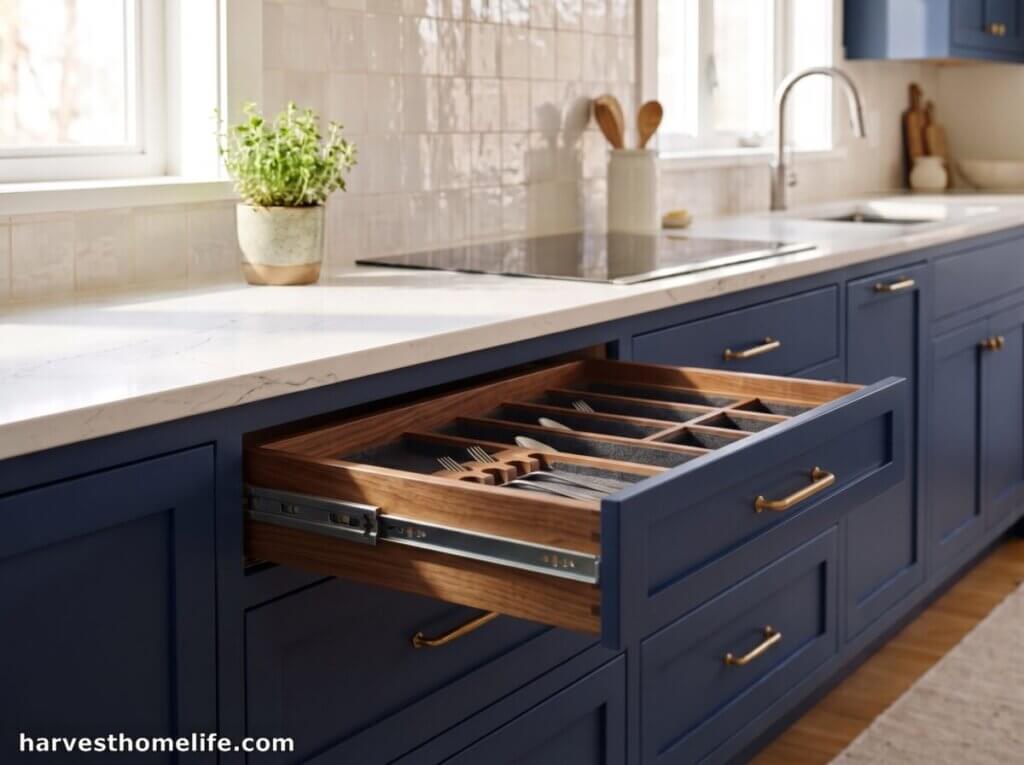
Building custom cabinet drawers requires dead-on accuracy. Using a reliable drawer dimensions calculator guarantees your final assembly fits perfectly within the cabinet opening without rubbing or binding. Whether you are sizing standard kitchen drawer dimensions or building shop furniture, knowing your precise outer box dimensions ensures your drawer slide clearance is correct and the hardware operates smoothly.
This drawer dimensions calculator handles the math by converting your hardware clearances and joinery overlap directly into an actionable cut list. It accounts for dado groove depths and material thickness, giving you a highly accurate drawer box calculator that spits out fraction-perfect U.S. tape measure dimensions ready for the chop saw.
Hardware & Material Guide
Understanding exactly how material overlap and hardware clearances impact your final cut list guarantees your custom drawers assemble perfectly on the first try.
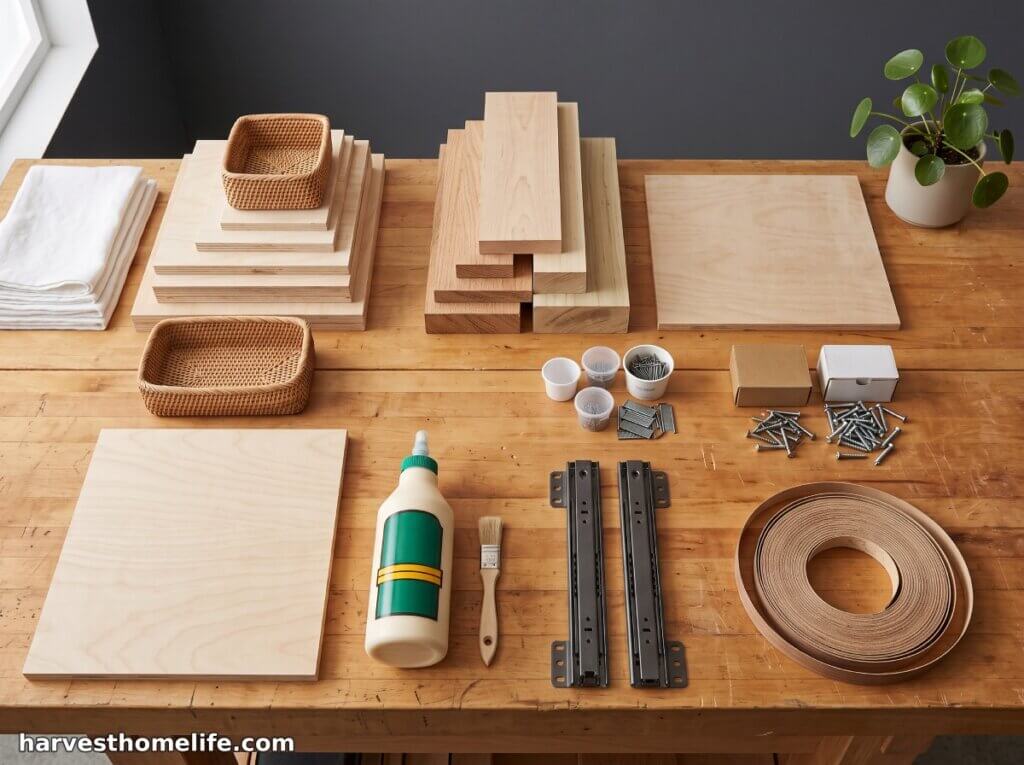
Materials Needed
Building a square, functional drawer box requires matching your raw stock to your hardware specs and joinery style before making your first cut.
| Material Item | Standard Specs / Variable | Function & Purpose in Build |
|---|---|---|
| Drawer Box Wall Lumber | 1/2″, 5/8″, or 3/4″ Baltic Birch Plywood or Solid Hardwood (Maple/Oak/Poplar) | Forms the 4 outer walls (2 sides, 1 front, 1 back). Baltic Birch is the shop standard due to its core stability and void-free plies. |
| Bottom Panel Board | 1/4″ or 3/8″ Plywood Sheet | Forms the drawer floor. Cut to fit inside routed dado grooves or fastened flush to the bottom edges of the box. |
| Drawer Slides (Hardware) | Side-Mount (requires 1/2″ side clearance per side) or Undermount (requires specific bottom recess height) | Hardware that mounts the box to the cabinet carcass. Selected length must match internal cabinet depth minus 1″. |
| PVA Wood Glue | Type II or Type III Interior Wood Glue | Primary bonding agent for all corner joinery (butt joints, dados, or dovetails) and dado bottom grooves. |
| Fasteners | 1-1/4″ 18-Gauge Brad Nails or 1″ Pocket Screws | Holds the box square and clamped tightly together while the wood glue fully cures. |
| Veneer Edge Banding | 13/16″ Iron-On Hardwood/Birch Edge Tape | Applied to the top exposed raw plywood edges of the wall pieces to conceal plies and prevent splintering. |
How to Calculate Exact Drawer Box Dimensions
Step 1: Measuring Your Cabinet Opening
Use a tape measure to find the exact interior width, height, and depth of the cabinet carcass. Check the width at the front, middle, and back of the cabinet box. Use the smallest measurement if the cabinet is slightly out of square.
Step 2: Determining Drawer Slide Clearance
Hardware dictates the math. Subtract your total side slide clearance from the opening width. For standard side-mount slides, subtract 1″ total. Subtract your total vertical clearance from the opening height (typically 3/4″ to 1″ total) to prevent the top and bottom edges from catching. Finally, subtract 1″ from your internal cabinet depth so the drawer never bottoms out against the back wall.
Step 3: Factoring Material Thickness & Joinery Overlap
The final length of your individual boards depends strictly on the assembly method. If your side walls run the full depth of the box (standard butt or dado joints), cut them to the final outer depth. The front and back pieces must then be cut shorter—specifically, the outer width minus twice the material thickness. Reverse this math if the front and back boards run the full width of the box.
Drawer Box Cut List Formulas Explained (Sides & Bottom Panel)
All four wall pieces share the identical calculated outer box height. The bottom panel math changes strictly based on how it mounts. If you pin it flush to the bottom, cut it to the final outer width and depth. If you inset it into a dado groove, add twice the dado groove depth back into the panel’s width and depth after subtracting twice the wall material thickness. For undermount slides, ensure your dado routing height placement exactly matches the specific bottom recess required by the hardware brand.
Frequently Asked Questions
Q. What size drawer slides do I need?
A. Measure your internal cabinet depth and subtract 1 inch for breathing room. Drawer slides are typically sold in even increments (like 18″, 20″, or 22″). Choose the standard slide length that perfectly matches your calculated drawer box depth.
Q. How to measure for undermount drawer slides?
A. Measure the internal cabinet opening width, height, and depth exactly. Because undermount slides have highly rigid tolerances, you must build the drawer box to match the exact dimensional deduction sheet provided by the slide manufacturer (including a specific 1/2-inch bottom recess and rear notch logic).
Q. How much does a professional cabinet maker charge to build and install sliding drawers?
A. Having custom drawer boxes professionally built and installed typically costs between $100 and $250 per drawer. This price fluctuates based on the wood species used (e.g., Baltic birch vs. solid maple), the joinery style (like dovetail joints), and the caliber of drawer slides chosen.
Q. What are standard kitchen drawer dimensions?
A. While custom builds vary, standard kitchen drawer dimensions typically accommodate standard 24-inch deep base cabinets. This means the outer drawer box depth is usually 21 or 22 inches to allow room for the slides. Drawer widths generally range from 12 to 36 inches depending on the specific cabinet opening, while heights range from 3 to 4 inches for top utility drawers and up to 10 inches for deep pot-and-pan drawers.
Planning your next project? Browse our master hub of Free DIY Home & Garden Calculators to get instant material lists, spacing math, and budget estimates.