Kitchen Cabinet Painting Cost Calculator
Estimate exact material quantities and financial costs of DIY cabinet painting versus hiring a professional.
How to Use the Calculator
Estimate the exact retail material quantities needed and compare the total financial cost of a DIY cabinet painting project against hiring a professional.
- Input your Upper Cabinet Length using whole inches and exact 16th-inch fractions.
- Input your Lower Cabinet Length using whole inches and exact 16th-inch fractions.
- Enter the Number of Doors as a whole number.
- Enter the Number of Drawers as a whole number.
- Input the Primer Cost per Gallon using standard currency format (defaults to $45.00).
- Input the Paint Cost per Gallon using standard currency format (defaults to $75.00).
- Enter a Waste Factor % to account for touch-ups and spills (defaults to 10%).
- Enter a Contingency Buffer % to handle unexpected supply runs (defaults to 10%).
- Input the Estimated Pro Rate per Linear Foot for your local market (defaults to $150.00).
Understanding Your Results
- Retail Primer Required: Estimates total square footage by allocating 4 square feet per door, 2 square feet per drawer, and 2.5 square feet per linear foot. It assumes one coat at a coverage rate of 350 square feet per gallon, applies your waste factor, and rounds up to output the total 1-gallon cans needed.
- Retail Paint Required: Uses the same square footage formula but assumes two full coats of coverage, rounding up to guarantee you buy enough whole 1-gallon cans to finish the job.
- Estimated Pro Cost: Multiplies your total linear feet by the professional rate per linear foot to establish a baseline contractor bid.
- Total DIY Savings vs Pro: Subtracts your total DIY materials cost from the estimated professional cost to reveal the exact financial value of your sweat equity.
- DIY Cost per Linear Foot: Divides your total DIY expenses by your total linear feet.
- Total Estimated DIY Cost: Multiplies your required cans by their costs, adds a baseline sundry supplies cost ($75.00 plus $2.00 per linear foot), and adds your contingency buffer percentage to the final total for a safe budget.
Accurately estimating your paint quantities ensures you buy exactly what you need without blowing your budget on extra gallons.
Tools Needed
- Tape measure
- High-density foam rollers and angled trim brushes
- Painter’s tape, plastic drop cloths, and tack cloths
Materials Needed
- Primer (1-Gallon Cans)
- High-Quality Cabinet Paint (1-Gallon Cans)
- Degreaser and Wood Filler
- Sandpaper (120-Grit and 220-Grit)
Always check local building codes and HOA guidelines before starting.
How much does it cost to repaint the kitchen cabinets?
A professional contractor typically charges between $100.00 and $200.00 per linear foot, often pushing total bids over $3,000.00. Handling the job yourself drops the cost to roughly $10.00 to $25.00 per linear foot, strictly covering the paint, primer, and sundry supplies.
Enter your exact cabinet dimensions and local material prices into the calculator above to compare your DIY budget against a professional estimate.
Project Overview
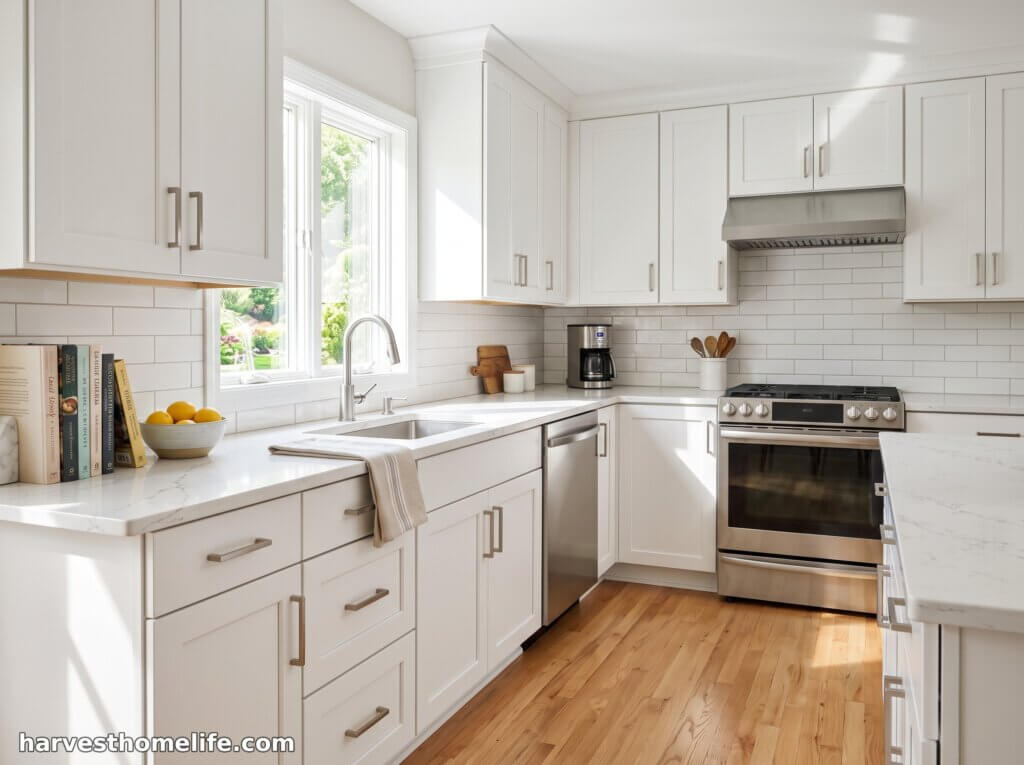
Using a precise kitchen cabinet painting cost calculator is the best way to evaluate if tackling the project yourself makes financial sense. While a full kitchen remodel involving tearing out existing boxes costs tens of thousands of dollars, painting your current doors and frames drastically improves your home’s resale value for a fraction of the price.
This tool breaks down your exact material needs so you can directly compare your sweat equity against a contractor’s bid.
A reliable kitchen cabinet painting cost estimator determines the exact number of 1-gallon cans required based on standard square footage formulas. By factoring in primer, high-quality cabinet paint, and sundry supplies, you get a highly accurate cabinet painting cost per linear foot.
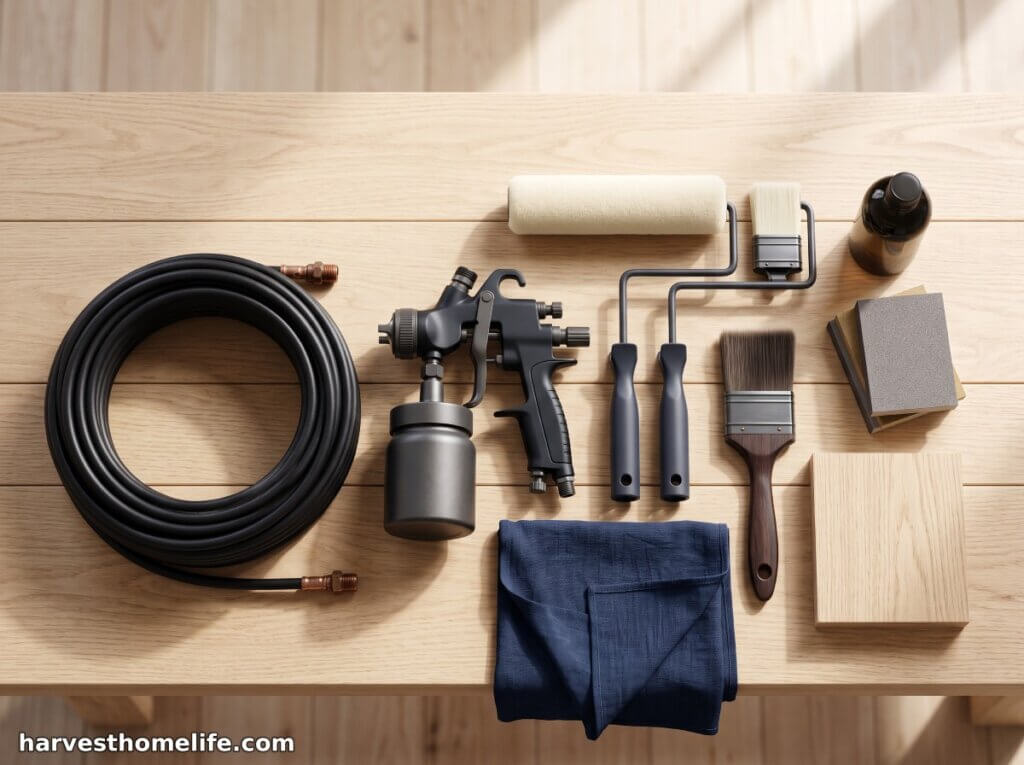
This specific cabinet painting cost calculator strictly computes material quantities and financial outputs; it does not factor in the heavy hours of prep work, sanding, or equipment rentals like HVLP sprayers needed to do the job right.
Cabinet Painting Execution and Planning Guide
How should you adjust paint estimates for spraying vs. rolling?
If you plan to use an HVLP sprayer for a smooth, factory-like finish, overspray will significantly reduce your paint yield. When using the calculator for a sprayed finish, increase your Waste Factor % from the standard 10% up to 15% or 20% to ensure you have enough material to complete the final coats without running dry.
What is the standard timeline for DIY kitchen cabinet painting?
A standard 20-linear-foot kitchen typically takes a DIYer 5 to 7 days to complete. The bulk of this timeline is strictly consumed by the mandatory drying and curing phases between your degreasing, sanding, primer coat, and two finish coats. Never rush your recoat times, or the fresh paint will easily scratch and peel.
Frequently Asked Questions
Q. How do you calculate painting cost?
A. You calculate the cost by converting your linear cabinet length, doors, and drawers into estimated square footage. Calculate your primer (one coat) and paint (two coats) separately by dividing the surface area by 350 and applying your waste factor. Round up to whole cans for each, multiply by their respective retail prices, add baseline sundry costs, and apply your contingency buffer percentage to the final total for a safe budget.
Q. What is the average cost of having kitchen cabinets painted?
A. The average professional cost ranges depending on your market, but standard rates sit around $150.00 per linear foot. For a standard kitchen with 20 linear feet of cabinetry, expect professional bids to start right around $3,000.00.
Q. Why is cabinet painting so expensive?
A. Cabinet painting is expensive because 80% of the job is intense physical labor. Professionals must completely degrease, sand, repair, and mask the entire kitchen before applying a single drop of primer. You are paying for meticulous prep work, not just the paint.
Planning your next project? Browse our master hub of Free DIY Home & Garden Calculators to get instant material lists, spacing math, and budget estimates.